


Can a Bird Repellent Kite Be Used to Deter Auklets?
Auklets are small seabirds known for their unique behaviors and habitats. They often gather in large numbers on coastal cliffs and islands, which can sometimes lead to conflicts with human activities, such as in areas near ports, fisheries, or coastal infrastructure. As a supplier of bird repellent kites, I've been frequently asked whether our product can effectively deter auklets. In this blog, I'll explore this question from a scientific and practical perspective.
Understanding Auklets
Auklets belong to the family Alcidae, which includes puffins, murres, and guillemots. These birds have adapted to life in the marine environment, with streamlined bodies for swimming and diving. They feed mainly on small fish and zooplankton, and their nesting sites are typically on rocky cliffs or in crevices. Auklets are social birds, and their colonies can be quite large, sometimes numbering in the thousands.

One of the key factors in deterring auklets is understanding their behavior and sensory perception. Auklets have well - developed vision and are sensitive to movement and visual stimuli. They also have a good sense of hearing, which they use to communicate with each other and detect predators.
How Bird Repellent Kites Work
Bird repellent kites are designed to mimic the appearance and movement of predators. They are typically made of lightweight materials and are brightly colored or have reflective elements. When flown in the air, the kites create a visual deterrent that scares birds away. The movement of the kite in the wind makes it appear as if a predator is hovering or swooping, which triggers the birds' natural fear response.
The principle behind bird repellent kites is based on the concept of predator avoidance. Birds have evolved to recognize and avoid potential threats in their environment. By presenting a visual stimulus that resembles a predator, the kites can disrupt the birds' normal behavior patterns and encourage them to leave the area.
Can Bird Repellent Kites Deter Auklets?
There are several reasons to believe that bird repellent kites could potentially be effective in deterring auklets. Firstly, as mentioned earlier, auklets have good vision and are sensitive to visual stimuli. The bright colors and reflective surfaces of the kites are likely to catch their attention and trigger a fear response.
Secondly, the movement of the kite in the wind can mimic the flight patterns of natural predators of auklets, such as eagles or falcons. Auklets are instinctively wary of these predators, and the sight of a kite moving in a similar way could make them think that a real threat is present.
However, there are also some factors that could limit the effectiveness of bird repellent kites in deterring auklets. Auklets are highly adapted to their coastal environment and are used to dealing with natural predators. They may become habituated to the presence of the kites over time, especially if the kites are flown in the same area for an extended period.
Another factor to consider is the weather conditions. Auklets are seabirds and are used to strong winds and rough weather. If the wind is too strong, the kites may be difficult to control or may not fly in a realistic manner. On the other hand, if the wind is too weak, the kites may not move enough to create an effective deterrent.
Other Bird Repellent Options
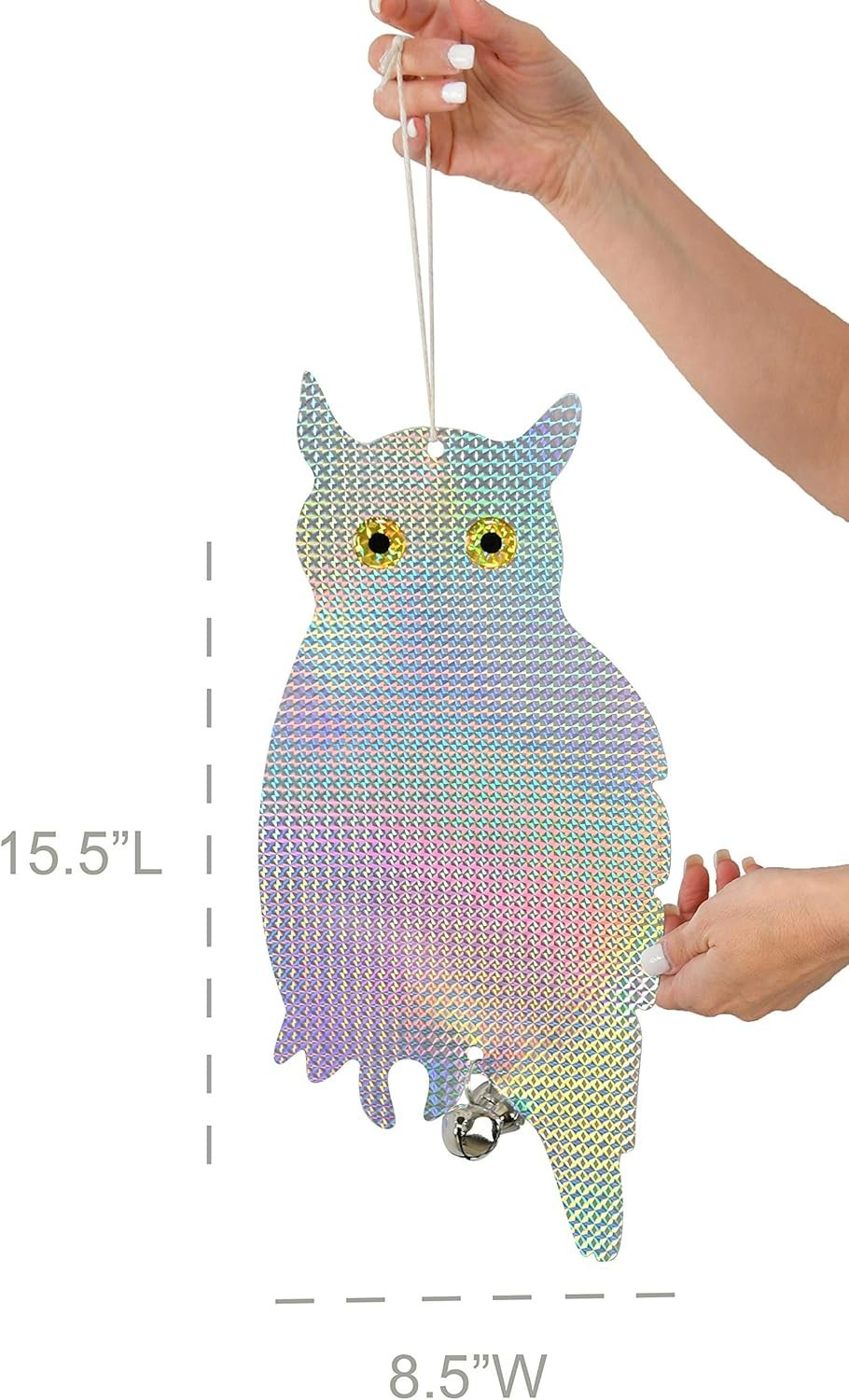
In addition to bird repellent kites, there are other products that can be used to deter auklets. For example, the Reflective Owl is a popular bird repellent device. It uses reflective materials and the shape of an owl to scare birds away. Owls are natural predators of many bird species, and the sight of a reflective owl can trigger a fear response in auklets.
Bird Away Spikes are another option. These spikes can be installed on ledges, rooftops, and other surfaces where auklets may land. The spikes make it uncomfortable for the birds to land, which discourages them from using the area.
Hanging Spiral Wind Spinners are also effective in deterring birds. The spinning motion of the spinners creates a visual distraction that scares birds away. They are especially useful in areas where there is a lot of wind.
Practical Considerations for Using Bird Repellent Kites
If you're considering using bird repellent kites to deter auklets, there are several practical considerations to keep in mind. Firstly, you need to choose the right location to fly the kites. The kites should be flown in an area where the auklets are present and where they can be easily seen. It's also important to ensure that the kites are flown at a safe distance from any buildings or other structures.
Secondly, you need to vary the flight patterns of the kites to prevent the auklets from becoming habituated. You can do this by changing the direction and height of the kites regularly.
Finally, it's important to monitor the effectiveness of the kites. If you notice that the auklets are no longer being deterred, you may need to try a different approach or combine the use of kites with other bird repellent methods.
Conclusion
In conclusion, bird repellent kites have the potential to be an effective tool for deterring auklets. Their visual and movement - based deterrents can trigger the birds' natural fear response. However, their effectiveness may be limited by factors such as habituation and weather conditions. To maximize the effectiveness of bird repellent kites, it's advisable to combine them with other bird repellent products, such as the Reflective Owl, Bird Away Spikes, and Hanging Spiral Wind Spinners.
If you're facing problems with auklets or other bird species and are interested in our bird repellent kites or other products, I encourage you to reach out for a procurement discussion. We can provide you with more detailed information and help you choose the most suitable solutions for your specific situation.
References
- Gaston, A. J., & Jones, I. L. (1998). The Auks: Alcidae. Oxford University Press.
- Kress, S. W. (2000). Bird conservation in the twenty - first century. Proceedings of the National Academy of Sciences, 97(11), 6112 - 6114.
- Newton, I. (1998). Population limitation in birds. Academic Press.


