


Can a bird repellent kite be used to deter shearwaters?
As a supplier of bird repellent kites, I often encounter questions from customers about the effectiveness of our products against different bird species. One such question that has come up recently is whether a bird repellent kite can be used to deter shearwaters. In this blog post, I will explore this topic and provide some insights based on scientific knowledge and practical experience.
Shearwaters are a group of seabirds that belong to the family Procellariidae. They are known for their long - distance migrations and their ability to fly long distances over the open ocean. Shearwaters are often found in large colonies on coastal islands and cliffs, where they nest and raise their young. These birds can cause problems in certain areas, such as airports near coastal regions or aquaculture farms, where their presence can pose risks to human activities.
The concept behind bird repellent kites is to create a visual deterrent that scares birds away. These kites are usually designed to mimic the appearance of a predator, such as a hawk or an eagle. The movement of the kite in the wind, along with its realistic shape and colors, is intended to trigger the natural fear response in birds, making them avoid the area where the kite is flying.
When it comes to shearwaters, there are several factors to consider in determining the effectiveness of a bird repellent kite. First, we need to understand the behavior and visual perception of shearwaters. Shearwaters have well - developed vision, which they use for navigation, foraging, and detecting predators. They are able to detect movement and patterns in the sky, and they are likely to be sensitive to the presence of large, fast - moving objects that resemble predators.
However, shearwaters are also highly adapted to life at sea. They are used to the open sky and the presence of large birds of prey, such as gulls and skuas, which are part of their natural environment. This means that they may have a certain level of tolerance or habituation to the sight of large flying objects.
To test the effectiveness of a bird repellent kite against shearwaters, we need to consider the context in which the kite will be used. For example, if the kite is used in an area where shearwaters are not used to seeing large, predator - like objects, it may have a greater chance of success. On the other hand, if the area is already frequented by natural predators or large flying objects, the shearwaters may be less likely to be deterred by the kite.
In addition to the visual aspect, the movement of the kite is also crucial. Shearwaters are used to the fluid, graceful movements of natural fliers. A bird repellent kite that moves erratically or in an unnatural way may be more likely to catch their attention and trigger a fear response. The wind conditions also play an important role. A kite that can fly steadily and realistically in different wind speeds is more likely to be effective.
Another factor to consider is the size of the area to be protected. Shearwaters are known to cover large areas during their foraging and migration flights. If the area to be protected is too large, a single bird repellent kite may not be sufficient to create a strong enough deterrent effect. In such cases, multiple kites may need to be used in a coordinated manner.
It's also worth noting that bird repellent kites are just one tool in the arsenal of bird control methods. There are other products that can be used in conjunction with kites to enhance the deterrent effect. For example, the Hanging Spiral Wind Spinner can add an additional visual and auditory deterrent. The spinning motion and the reflective surfaces of the wind spinner can create a disorienting effect for the shearwaters.
Bird Away Spikes can be used in areas where shearwaters may try to land or perch, such as on buildings or structures near the coast. These spikes prevent the birds from getting a comfortable foothold, making the area less attractive to them.
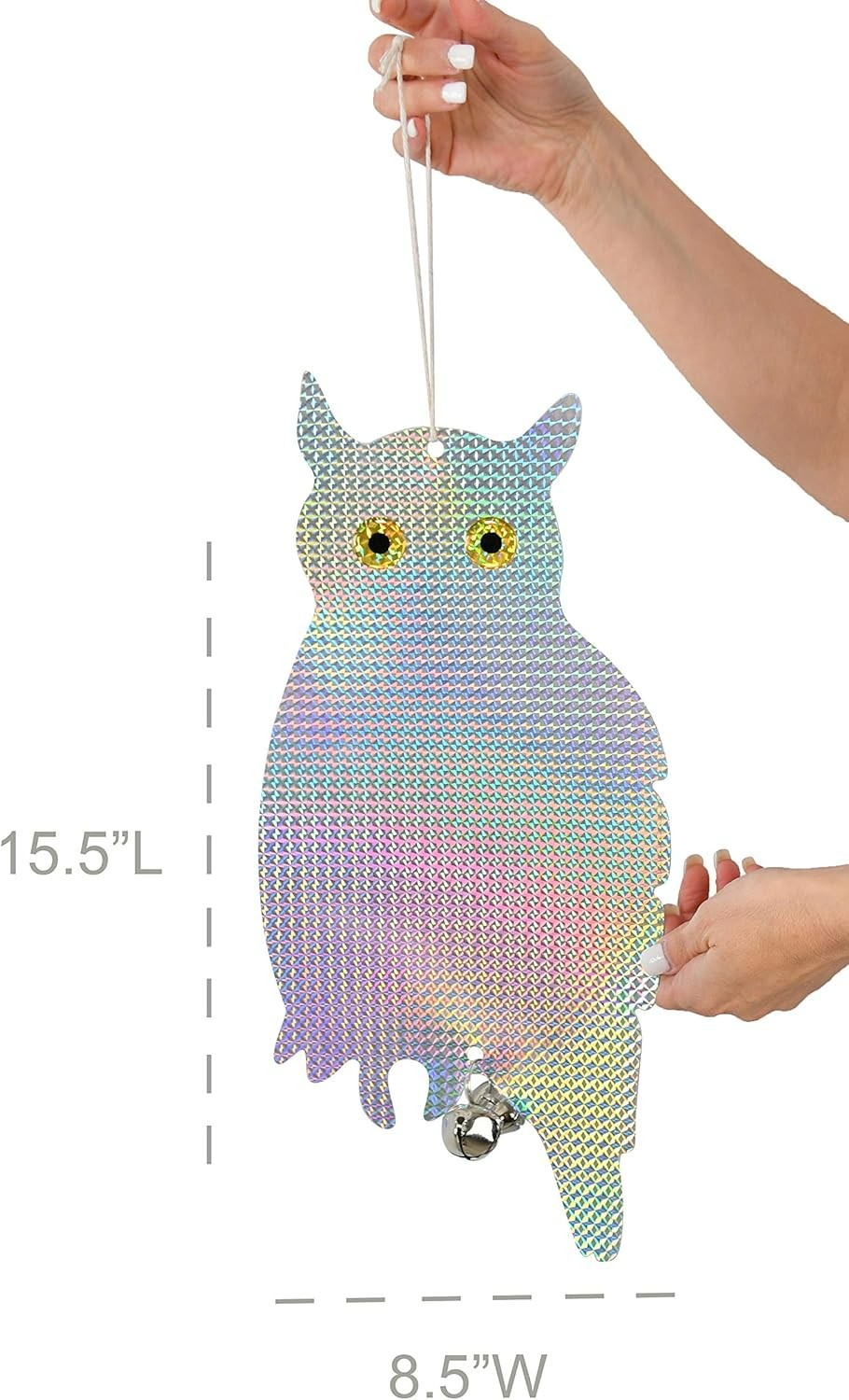
The Reflective Owl is another product that can be used in combination with the bird repellent kite. Owls are natural predators of many bird species, and the reflective features of the owl can enhance its visual deterrent effect, especially at night or in low - light conditions.

In conclusion, while a bird repellent kite has the potential to be an effective tool for deterring shearwaters, its success depends on several factors, including the behavior and habituation of the shearwaters, the context of use, and the proper deployment of the kite. It is also advisable to use the kite in combination with other bird control products to increase its effectiveness.
If you are facing a shearwater problem and are interested in our bird repellent kites or other bird control products, we encourage you to contact us for a detailed discussion. Our team of experts can provide you with customized solutions based on your specific needs and the characteristics of the area you want to protect. We are committed to providing high - quality products and professional advice to help you solve your bird control problems effectively.
References
- "The Behavior and Ecology of Shearwaters" - A scientific study on the behavior and ecological aspects of shearwaters.
- "Bird Vision and Predator Detection" - Research on how birds perceive visual stimuli and detect predators.
- "Bird Control Methods and Their Effectiveness" - A comprehensive review of different bird control methods and their applications.


