


Making your own hanging fly bags can be an appealing idea for those looking to take a hands - on approach to pest control. As a supplier of hanging fly bags, I've seen a growing interest in DIY solutions. There are several aspects to consider when thinking about making your own hanging fly bags, including the materials, effectiveness, and cost - efficiency.
Materials and Ingredients
To make a basic hanging fly bag, you'll need a few common household items. A clear plastic bag is the primary container. You can use a sandwich bag or a larger gallon - sized bag, depending on the scale of your fly problem. The attractant is the key component. A popular homemade attractant is a mixture of sugar, water, and vinegar. Sugar provides the sweet smell that flies are attracted to, while vinegar adds a pungent odor that can be irresistible to them.
You can start by boiling about a cup of water and adding half a cup of sugar. Stir until the sugar is completely dissolved. Then, let the mixture cool and add about a quarter - cup of vinegar. Pour this solution into the plastic bag, leaving some air space at the top. Tie the bag shut with a string or a twist - tie, and make a loop at the top for hanging.

Another option for an attractant is overripe fruit. Bananas are a great choice as they start to emit a strong, sweet smell as they decay. Simply place a piece of overripe banana in the plastic bag and add a little water to create a moist environment. The flies will be drawn to the fruit and get trapped in the bag.
Effectiveness
When it comes to effectiveness, homemade hanging fly bags can work to some extent. The attractants used are based on the natural preferences of flies. However, they may not be as effective as commercial hanging fly bags. Commercial products are often formulated with specific chemicals and attractants that are scientifically proven to be highly effective at luring flies.
For example, some commercial hanging fly bags use pheromones, which are chemical signals that flies use to communicate. These pheromones can be very powerful in attracting flies from a distance. Homemade solutions, on the other hand, rely on simple food - based scents that may not have the same long - range attraction.
In addition, commercial hanging fly bags are designed with a more sophisticated trapping mechanism. They often have a special shape or entrance that makes it easier for flies to get in but harder for them to get out. Homemade bags may not have this level of engineering, and some flies may be able to escape.
Cost - Efficiency
One of the main advantages of making your own hanging fly bags is the cost. The materials needed are inexpensive and can usually be found around the house. You don't have to pay for the research and development, packaging, and marketing that go into commercial products.
If you have a small fly problem in a limited area, such as a patio or a small shed, making your own hanging fly bags can be a cost - effective solution. However, if you have a large - scale fly infestation, such as on a farm or in a commercial kitchen, the time and effort required to make multiple homemade bags may not be worth it. In these cases, it may be more practical to purchase commercial hanging fly bags in bulk.
Safety Considerations
When making your own hanging fly bags, it's important to consider safety. If you're using vinegar, be careful not to spill it on your skin or in your eyes. The sugar solution can also be sticky and attract other pests if not properly contained.
If you're using overripe fruit, make sure to keep the bags away from areas where children or pets can access them. The decaying fruit can attract other insects and may cause a mess if the bag is punctured.
Other Pest Control Options
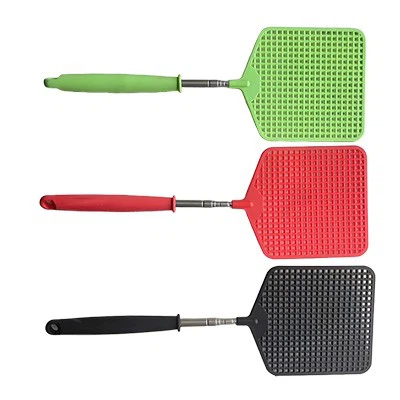
While hanging fly bags can be effective for controlling flies, they are not the only option. There are other pest control products that can complement or be used instead of hanging fly bags. For example, Foldable Mosquito Swatter is a great tool for quickly getting rid of individual flies and mosquitoes. It's portable and easy to use, making it ideal for indoor and outdoor use.
Extra Long Handle Fly Swatter is another option. It allows you to reach flies in hard - to - reach places, such as high ceilings or behind furniture. The long handle gives you more leverage and makes it easier to swat flies without getting too close.
Fly Swatter Heavy Duty is designed for more serious fly problems. It's made of durable materials and can withstand repeated use. The heavy - duty construction makes it more effective at killing flies with a single swat.
Conclusion
So, can you make your own hanging fly bags? The answer is yes. It's a fun and cost - effective way to deal with a minor fly problem. However, it's important to understand the limitations. Homemade hanging fly bags may not be as effective as commercial products, especially for large - scale infestations.
As a supplier of hanging fly bags, I offer a range of high - quality commercial products that are designed to provide maximum effectiveness. If you're facing a significant fly problem, I encourage you to consider our products. They are formulated with the latest technology and attractants to ensure that they can quickly and efficiently control fly populations.
If you're interested in learning more about our hanging fly bags or other pest control products, or if you're looking to place an order, please feel free to contact us for a procurement discussion. We're here to help you find the best solution for your pest control needs.
References
- Smith, J. (2020). "Pest Control Basics: Understanding Fly Behavior". Journal of Pest Management, 15(2), 34 - 42.
- Johnson, A. (2019). "The Science of Fly Attractants". Entomology Today, 22(3), 56 - 63.
- Brown, C. (2021). "Comparing Homemade and Commercial Pest Control Solutions". Pest Control Review, 18(4), 78 - 85.


