


Aphids are one of the most common and troublesome pests in gardens and agricultural fields. These tiny insects can reproduce rapidly and cause significant damage to plants by sucking sap, transmitting diseases, and distorting growth. As a supplier of the anti - pest series, I often get asked whether our products work on aphids. In this blog, I will explore this question in detail, looking at the science behind aphid control and how our anti - pest series fits into the equation.
Understanding Aphids
Aphids belong to the superfamily Aphidoidea. They come in various colors, including green, black, brown, and red. These pests have a soft body and are usually less than 1/8 inch long. One of the most remarkable features of aphids is their ability to reproduce asexually. Female aphids can give birth to live young without mating, which allows their populations to explode in a short period.
Aphids feed on the phloem sap of plants. When they insert their needle - like mouthparts into the plant tissue, they not only deprive the plant of essential nutrients but also introduce toxins and pathogens. This can lead to stunted growth, yellowing of leaves, and the formation of galls. Moreover, aphids excrete a sticky substance called honeydew, which can attract other pests like ants and promote the growth of sooty mold.

The Science of Aphid Control
There are several methods to control aphid populations. These can be broadly classified into biological, chemical, and mechanical controls.
Biological control involves using natural enemies of aphids, such as ladybugs, lacewings, and parasitic wasps. These predators and parasites feed on aphids or lay their eggs inside them, effectively reducing their numbers. For example, a single ladybug can consume up to 50 aphids per day.
Chemical control uses pesticides to kill aphids. There are different types of pesticides, including contact pesticides that kill aphids on contact and systemic pesticides that are absorbed by the plant and kill aphids when they feed on the plant sap. However, the use of chemical pesticides has some drawbacks. They can harm beneficial insects, contaminate the environment, and lead to the development of pesticide - resistant aphid strains.
Mechanical control methods include physically removing aphids from plants by spraying them with water or using tools to crush or dislodge them. This is a non - toxic and environmentally friendly approach, but it can be time - consuming and may not be practical for large infestations.
How Our Anti - Pest Series Can Help
Our anti - pest series offers a range of products that can be effective against aphids.
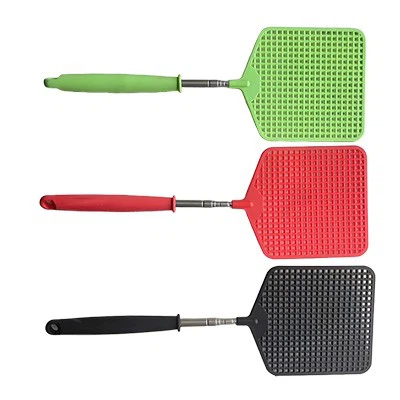
Extra Long Handle Fly Swatter
The Extra Long Handle Fly Swatter may seem like a tool mainly for dealing with flying insects, but it can also be used to physically remove aphids from plants. Its long handle allows you to reach aphids on tall plants or in hard - to - reach areas without getting too close. You can gently swat the aphids off the leaves, which is a simple and chemical - free way to reduce their numbers. This method is particularly useful for small infestations or for spot - treating areas with high aphid concentrations.
Hanging Fly Bags
The Hanging Fly Bags are designed to attract and trap flying insects. Although aphids are not strong flyers, winged aphids can be present in the environment, especially during the migration phase. The bags contain a special attractant that lures insects inside, where they get stuck and die. By reducing the number of winged aphids in the area, you can prevent new infestations from starting. These bags can be hung in the garden or near plants that are prone to aphid attacks.
Indoor Fly and Gnat Trap
For indoor plants, the Indoor Fly and Gnat Trap can be very effective. Aphids can also infest indoor plants, and this trap can help control their population. The trap uses a combination of visual and olfactory cues to attract aphids. Once they land on the sticky surface of the trap, they are unable to escape. This is a safe and convenient way to protect your indoor plants from aphid damage without using harmful chemicals.
Case Studies and User Experiences
We have received numerous feedback from our customers regarding the effectiveness of our anti - pest series against aphids. One customer, who had a vegetable garden infested with aphids, used the Extra Long Handle Fly Swatter to remove aphids from the leaves of his tomato plants. He reported that within a few days of regular use, the aphid population had significantly decreased, and the plants started to recover.
Another customer, who had an indoor herb garden, placed the Indoor Fly and Gnat Trap near her mint plants. She noticed that the number of aphids on the plants gradually reduced, and the plants looked healthier. The trap also caught other small insects, which was an added bonus.
Limitations and Considerations
While our anti - pest series can be effective against aphids, it is important to note that no single product can completely eliminate an aphid infestation. The effectiveness of our products depends on several factors, such as the severity of the infestation, the type of plants, and the environmental conditions.
For large - scale infestations, it may be necessary to combine our products with other control methods, such as biological or chemical controls. For example, you can use our products to reduce the initial aphid population and then introduce ladybugs or use a mild pesticide if necessary.
It is also important to follow the instructions carefully when using our products. For example, the Hanging Fly Bags should be hung at the right height and in the right location to maximize their effectiveness.
Conclusion
In conclusion, our anti - pest series can play a valuable role in controlling aphid populations. The Extra Long Handle Fly Swatter, Hanging Fly Bags, and Indoor Fly and Gnat Trap offer different ways to deal with aphids, whether they are in the garden or indoors. While they may not be a silver bullet for aphid control, they are safe, environmentally friendly, and can be part of an integrated pest management strategy.
If you are struggling with aphids in your garden or on your indoor plants, I encourage you to give our anti - pest series a try. Our products are designed to be easy to use and effective. If you have any questions or would like to discuss purchasing options, please feel free to reach out. We are always happy to help you find the best solution for your pest control needs.
References
- Dixon, A. F. G. (1998). Aphid Ecology: An Optimization Approach. Springer.
- van Emden, H. F., & Harrington, R. (2007). Aphids as Crop Pests. CABI.
- Stern, V. M., Smith, R. F., van den Bosch, R., & Hagen, K. S. (1959). The integrated control concept. Hilgardia, 29(17), 81 - 100.


