


As a supplier of Simulation Pigeons, I've always been fascinated by the intricacies of their vision systems. Understanding how these simulated creatures "see" the world is not only a matter of scientific curiosity but also crucial for enhancing the effectiveness of our products. In this blog post, I'll delve into the workings of a Simulation Pigeon's vision system, exploring the technology behind it and its real - world applications.
The Basics of Pigeon Vision: Inspiration for Simulation
Before we can understand the simulated vision system, it's important to look at the real pigeon's vision. Pigeons have remarkable visual capabilities. Their eyes are positioned on the sides of their heads, giving them a wide field of view, approximately 340 degrees. This panoramic vision allows them to detect predators and food sources from various angles.
Pigeons also have excellent color vision. They can see a broader spectrum of colors than humans, including ultraviolet light. This ability helps them in tasks such as finding food, identifying mates, and navigating their environment. For example, some flowers have ultraviolet patterns that are invisible to humans but are clearly visible to pigeons, guiding them to nectar.
Components of a Simulation Pigeon's Vision System
Our Simulation Pigeons are equipped with a sophisticated vision system that mimics the key aspects of a real pigeon's vision. The core components include cameras, image - processing units, and software algorithms.

Cameras
The cameras in our Simulation Pigeons are strategically placed to replicate the wide - field view of real pigeons. We use high - resolution, wide - angle cameras that can capture a large area around the pigeon. These cameras are designed to be lightweight and energy - efficient, ensuring that they don't add excessive weight to the simulation model and can operate for extended periods.
The cameras are also sensitive to a broad range of light wavelengths, similar to a pigeon's eyes. They can detect ultraviolet light, which is crucial for simulating the full range of a pigeon's visual perception. This allows the Simulation Pigeon to "see" the same visual cues that a real pigeon would in its natural environment.
Image - Processing Units
Once the cameras capture the visual data, it is sent to the image - processing unit. This unit is responsible for analyzing the images and extracting relevant information. It uses advanced algorithms to detect objects, colors, and patterns in the visual field.
For example, the image - processing unit can identify potential predators or food sources based on their shape, size, and color. It can also detect movement, which is an important cue for a pigeon in the wild. If a fast - moving object is detected, the Simulation Pigeon can react accordingly, just as a real pigeon would.
Software Algorithms
The software algorithms are the brain of the vision system. They are designed to interpret the data processed by the image - processing unit and make decisions based on it. These algorithms are based on scientific research on pigeon behavior and vision.
One of the key algorithms is the object - recognition algorithm. This algorithm has been trained on a large dataset of images of objects that a pigeon might encounter in its environment, such as other birds, insects, and plants. It can accurately classify these objects and determine whether they are a threat, a food source, or something else.
Another important algorithm is the navigation algorithm. This algorithm uses the visual information to help the Simulation Pigeon navigate its environment. It can recognize landmarks, such as trees or buildings, and use them to determine its position and direction.
Real - World Applications of the Simulation Pigeon's Vision System
The vision system of our Simulation Pigeons has several practical applications.
Pest Control
In the agricultural sector, our Simulation Pigeons can be used for pest control. By mimicking the presence of real pigeons, they can deter other birds that may damage crops. The wide - field vision system allows the Simulation Pigeon to detect the approach of pest birds and react in a way that scares them away. For example, it can make sudden movements or emit sounds when it detects a pest bird. You can also check out other pest - control products like the Scarecrow Bird Repellent on our website.
Environmental Monitoring
Simulation Pigeons can also be used for environmental monitoring. Their vision systems can be used to detect changes in the environment, such as the presence of pollutants or the growth of invasive plant species. The cameras can capture images of the area, and the image - processing unit can analyze these images to identify any changes over time.
Security
In security applications, the Simulation Pigeons can be deployed in areas where human surveillance is difficult or expensive. Their wide - field vision and ability to detect movement make them effective for monitoring large areas. They can detect intruders and send alerts to security personnel.
Comparison with Other Lawn Decor and Bird - Related Products
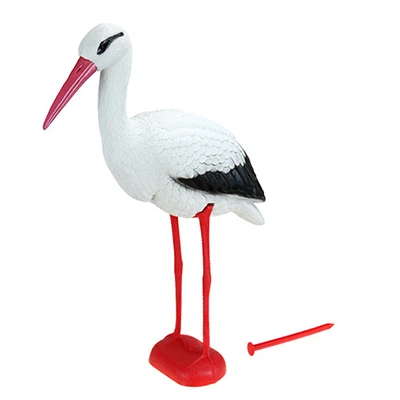
When compared to other lawn decor and bird - related products, our Simulation Pigeons offer unique advantages. For example, Plastic Stork and Frog Lawn Decor are mainly for aesthetic purposes. While they can add a decorative touch to a lawn or garden, they do not have the functionality of our Simulation Pigeons.
Our Simulation Pigeons not only look realistic but also have a functional vision system that can be used for practical purposes such as pest control and environmental monitoring. They are a more advanced and versatile option for those looking for both decoration and functionality in their outdoor spaces.
Future Developments in Simulation Pigeon Vision Systems
We are constantly working on improving the vision system of our Simulation Pigeons. One area of focus is enhancing the object - recognition capabilities. We are researching ways to make the algorithms more accurate in detecting a wider range of objects, including new types of pests and environmental hazards.
Another area of development is improving the energy efficiency of the vision system. We are exploring new technologies that can reduce the power consumption of the cameras and image - processing units, allowing the Simulation Pigeons to operate for longer periods without recharging.
Contact for Purchase and Collaboration
If you are interested in our Simulation Pigeons and their advanced vision systems, we invite you to contact us for purchase and collaboration opportunities. Our products are suitable for a wide range of applications, from agriculture to security. Whether you are a farmer looking for an effective pest - control solution or a security company in need of innovative surveillance tools, our Simulation Pigeons can meet your needs.
References
- "The Visual World of Birds" by David C. Inouye and Thomas W. Sherry
- "Pigeon Vision: A Model for Understanding Visual Perception" by Shigeru Watanabe
- Research papers on computer vision and image - processing algorithms for object recognition and navigation.


