


A walking green house, a revolutionary concept in the realm of horticulture, offers a plethora of potential uses that can transform the way we approach gardening and agriculture. As a supplier of walking green houses, I am excited to delve into the various applications and benefits of this innovative structure.
Mobile Gardening and Crop Rotation
One of the most significant advantages of a walking green house is its mobility. Unlike traditional stationary green houses, a walking green house can be easily moved across a field or garden. This mobility allows for effective crop rotation, which is a fundamental practice in sustainable agriculture. Crop rotation helps to prevent soil depletion, reduce pest and disease pressure, and improve overall soil health.
For instance, if you have been growing tomatoes in a particular area of your garden for several seasons, you can move the walking green house to a different location and plant a different crop, such as lettuce or cucumbers. This way, the soil has a chance to recover and replenish its nutrients. Moreover, pests and diseases that are specific to tomatoes are less likely to follow the crop to a new location, reducing the need for chemical pesticides.
Season Extension
Another major benefit of a walking green house is its ability to extend the growing season. By providing a controlled environment, a walking green house can protect plants from harsh weather conditions, such as frost, extreme heat, and heavy rain. This means that you can start planting earlier in the spring and continue growing crops later into the fall.

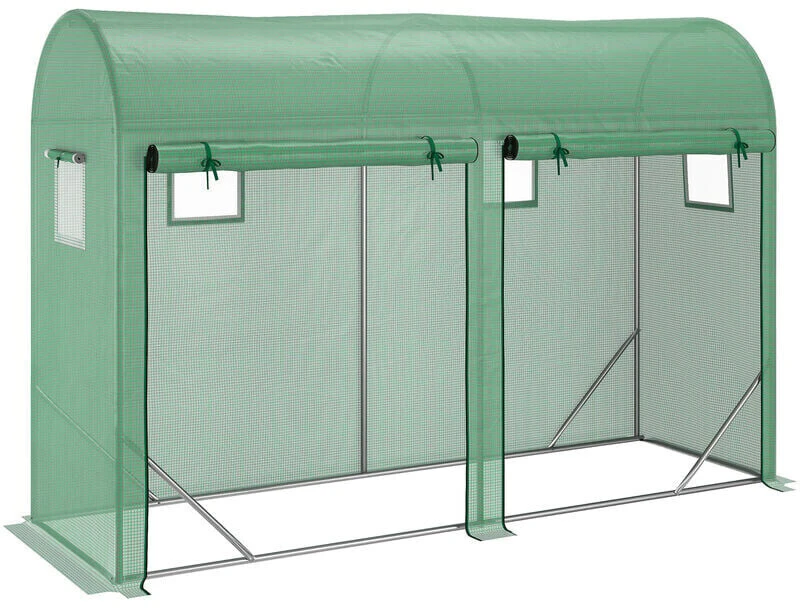
For example, in regions with short growing seasons, a walking green house can allow you to grow warm-season crops like tomatoes and peppers that would otherwise not have enough time to mature. You can start seedlings inside the green house in early spring, when the outside temperatures are still too cold, and then transplant them outside once the weather warms up. In the fall, you can move the green house over your plants to protect them from the first frost and extend the harvest period.
Microclimate Creation
A walking green house can also create a microclimate that is ideal for growing specific types of plants. By adjusting the temperature, humidity, and light levels inside the green house, you can mimic the natural environment of plants from different regions of the world. This opens up the possibility of growing exotic and rare plants that would not normally thrive in your local climate.
For instance, if you are interested in growing tropical plants, you can use a walking green house to create a warm and humid environment similar to their native habitat. You can install a heating system to maintain a constant temperature, a misting system to increase humidity, and artificial lighting to supplement natural sunlight. This way, you can enjoy the beauty and diversity of tropical plants in your own backyard.
Educational Purposes
Walking green houses are also excellent tools for educational purposes. They can be used in schools, universities, and community centers to teach students about plant biology, agriculture, and environmental science. By providing a hands-on learning experience, a walking green house can engage students of all ages and inspire them to pursue careers in these fields.
For example, a school can use a walking green house to grow a variety of plants throughout the year. Students can learn about the different stages of plant growth, the importance of soil health, and the role of pollinators in the ecosystem. They can also conduct experiments to study the effects of different environmental factors on plant growth, such as light, water, and nutrients.
Urban Gardening
In urban areas, where space is limited, a walking green house can be a great solution for growing your own food. It can be placed on a balcony, rooftop, or even in a small backyard. This allows urban dwellers to have access to fresh, organic produce without having to rely on grocery stores.
For instance, you can use a small greenhouse for growing tomatoes on your balcony to grow your own tomatoes. You can start the seeds inside the green house in the spring and then move the plants outside once they are big enough. This way, you can enjoy fresh, homegrown tomatoes throughout the summer.
Livestock and Poultry Protection
Walking green houses can also be used to provide shelter and protection for livestock and poultry. They can be used as a temporary or permanent housing solution, depending on your needs. By providing a controlled environment, a walking green house can protect animals from extreme weather conditions, predators, and diseases.
For example, if you have a small flock of chickens, you can use a walking green house as a chicken coop. You can install nesting boxes, perches, and feeders inside the green house to provide a comfortable and safe environment for your chickens. The mobility of the green house also allows you to move it to different locations in your yard, which can help to keep the grass and soil healthy.
Research and Experimentation
For researchers and scientists, a walking green house can be a valuable tool for conducting experiments and studies. It provides a controlled environment where variables such as temperature, humidity, light, and soil conditions can be carefully monitored and adjusted. This allows for accurate and reliable data collection, which is essential for scientific research.
For instance, a researcher studying the effects of climate change on plant growth can use a walking green house to simulate different climate scenarios. By adjusting the temperature and humidity inside the green house, the researcher can study how plants respond to changes in the environment. This type of research can help to develop strategies for adapting to climate change and ensuring food security in the future.
Landscaping and Aesthetics
In addition to its practical uses, a walking green house can also enhance the aesthetic appeal of your garden or landscape. With its unique design and structure, a walking green house can serve as a focal point in your outdoor space. It can be decorated with plants, flowers, and other decorative elements to create a beautiful and inviting environment.
For example, you can use a Grow Tunnel Greenhouse to create a beautiful tunnel of plants in your garden. You can plant climbing plants, such as roses or clematis, on the sides of the tunnel and train them to grow up the structure. This will create a stunning visual effect and add a touch of elegance to your garden.
Contact for Purchase and Consultation
The potential uses of a walking green house are truly vast and varied. Whether you are a home gardener, a commercial farmer, an educator, a researcher, or simply someone who loves plants, a walking green house can offer you a unique and rewarding experience. If you are interested in learning more about our walking green houses or would like to discuss your specific needs and requirements, please feel free to contact us. We are committed to providing high-quality products and excellent customer service, and we look forward to helping you find the perfect walking green house for your needs.
References
- Smith, J. (2018). The Benefits of Mobile Greenhouses. Journal of Sustainable Agriculture, 42(3), 256-268.
- Johnson, A. (2019). Crop Rotation: A Key Practice in Sustainable Agriculture. Agricultural Science Review, 35(2), 123-135.
- Brown, C. (2020). Creating Microclimates for Exotic Plant Growth. Horticulture Today, 56(4), 78-85.


